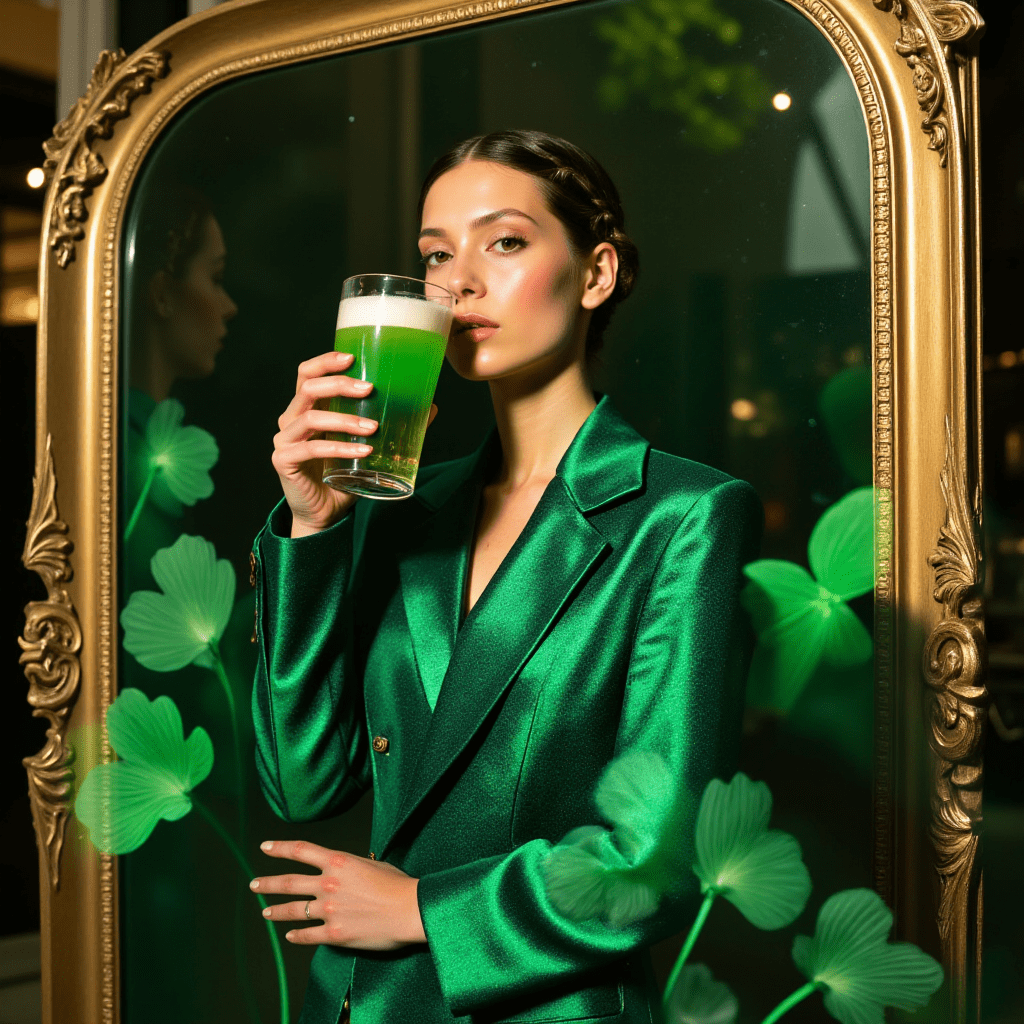
Wishing a Happy St. Patrick’s Day to all my international friends!
As you might know, english isn’t my first language, and sometimes, I feel like that holds me back—especially when crafting AI prompts. The way you phrase things in English can completely change the results you get, and AI tools often respond better to specific wording, structure, or cultural nuances.
But instead of seeing this as a limitation, I’ve found ways to make AI work for me, no matter the language barrier. Here are some practical tips that help me write better prompts:
🔹 Use AI to Help You Write Prompts
Before generating an image, I sometimes ask ChatGPT or another AI to refine my idea. Example:
👉 “Rewrite this prompt in better English: A futuristic dress with origami folds in a cinematic setting.”
🔹 Be Direct & Simple
AI doesn’t always understand complex phrasing. Instead of:
❌ “I want a very elegant dress, inspired by vintage fashion, but also modern, with a futuristic touch.”
✅ Try: “Elegant vintage-inspired dress with futuristic details, high fashion, dramatic lighting.”
🔹 Use Synonyms to Explore Variations
If one word doesn’t work, try another:
👉 “Structured dress” → “Architectural silhouette”
👉 “Soft fabric movement” → “Fluid draping, dynamic folds”
🔹 Look at Prompts That Work
Analyze existing AI-generated images that you like. Reverse-engineer the prompts and tweak them to match your own style.
🔹 Keep Testing & Refining
The best results often come after multiple iterations. If the first image isn’t quite right, tweak the phrasing, add details, or remove unnecessary words.
At the end of the day, creativity isn’t about perfect language—it’s about ideas. And AI can help us bridge that gap.
💡 Do you struggle with writing AI prompts in English? What’s your best trick for getting great results?
 3Dart.Studio
Leave a comment